
Mathematical Foundations
Quantum Machine Learning Is Not About Data
Quantum machine learning does not process datasets. It reshapes mathematical structure.
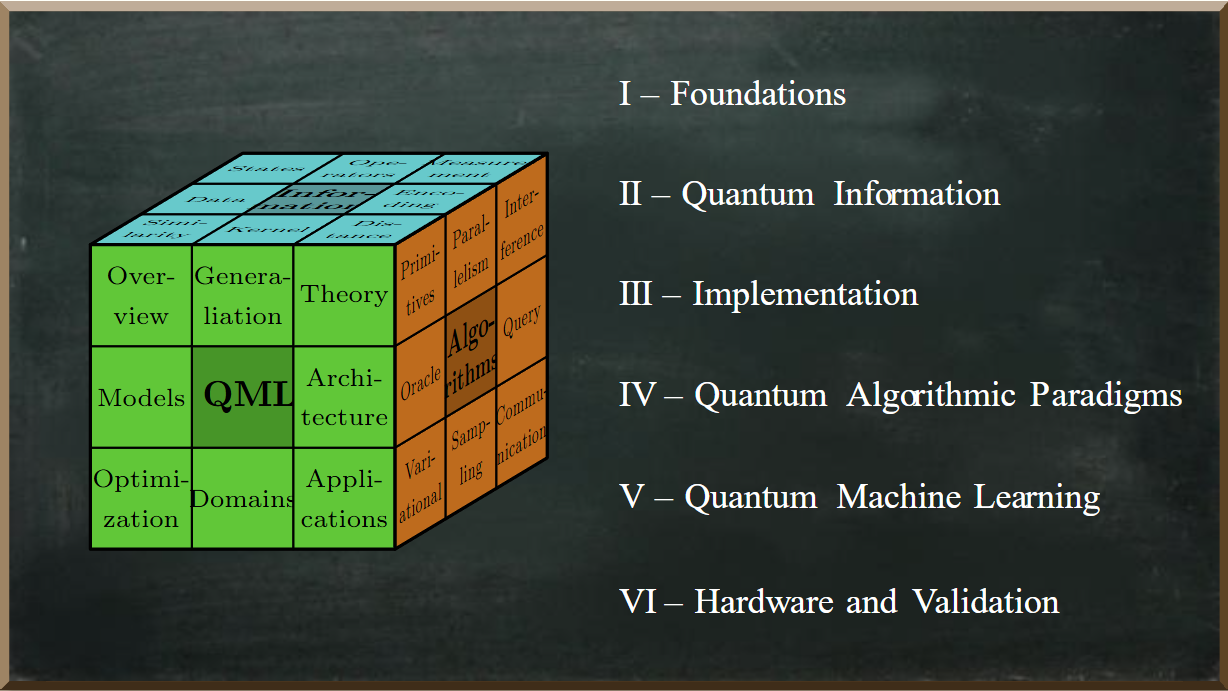
Data goes in, computation happens, answers come out. That assumption works in classical Machine Learning. In quantum machine learning, it fails immediately.
Once data is encoded, it vanishes as an object you can point to. What remains are vectors, operators, symmetries, and statistics. If you try to reason about quantum machine learning in terms of rows, features, or samples, everything feels opaque and fragile. The tension you feel is real. It’s the friction between a data-centric mindset and a structure-centric theory.
This entire mathematical section exists to resolve that tension.
Part I – Foundations
You really want to start with the theory? But don't say I didn't warn you.
Quantum computing, machine learning, and ultimatively quantum machine learning share a common language. The Foundations-Part is all about this language. The mathematics, physics, and computational ideas that make Quantum Machine Learning make sense.
- MathLinear Algebra, Tensor AnalysisProbability and StatisticsComplex Vector SpacesGroup Theory and Symmetry
- Physics and Quantum MechanicsQuantum MechanicsPhysical InterpretationQuantum Systems and Models
- Computer ScienceClassical Computation ModelsComputational ComplexityInformation Theory
- Classical Machine LearningCore ParadigmsModels and ArchitecturesOptimization and Generalization
Part II - Quantum Information
Understand the most important concepts underlying to quantum computing
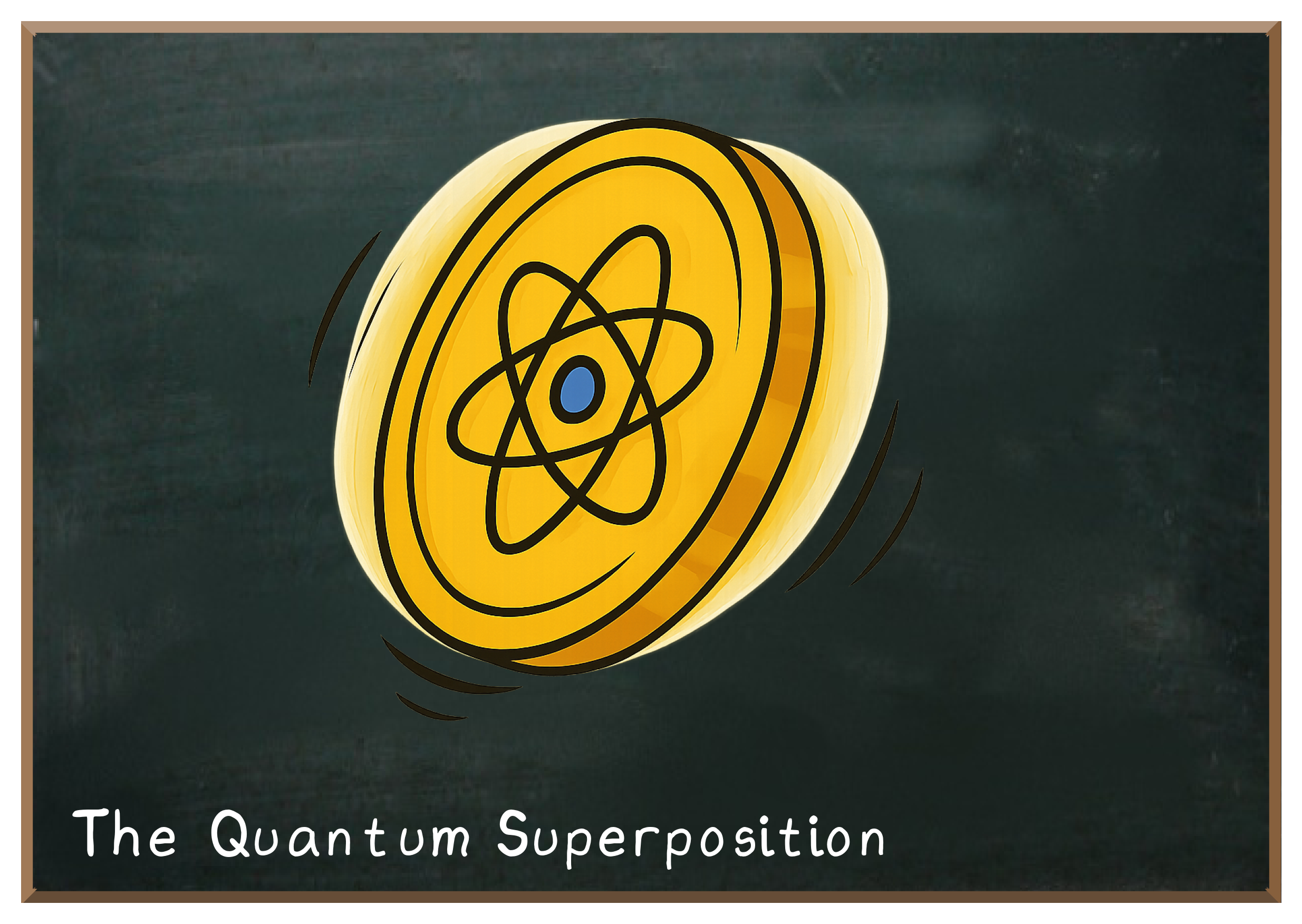
Core Components
The quantum superposition is much easier to understand than you think.
Quantum States
Quantum Operators
Key Theorems

Measurement
Is it spooky action at a distance? Or is it just correlation?
Born Rule
Projection
Expectation Value
Advanced Techniques
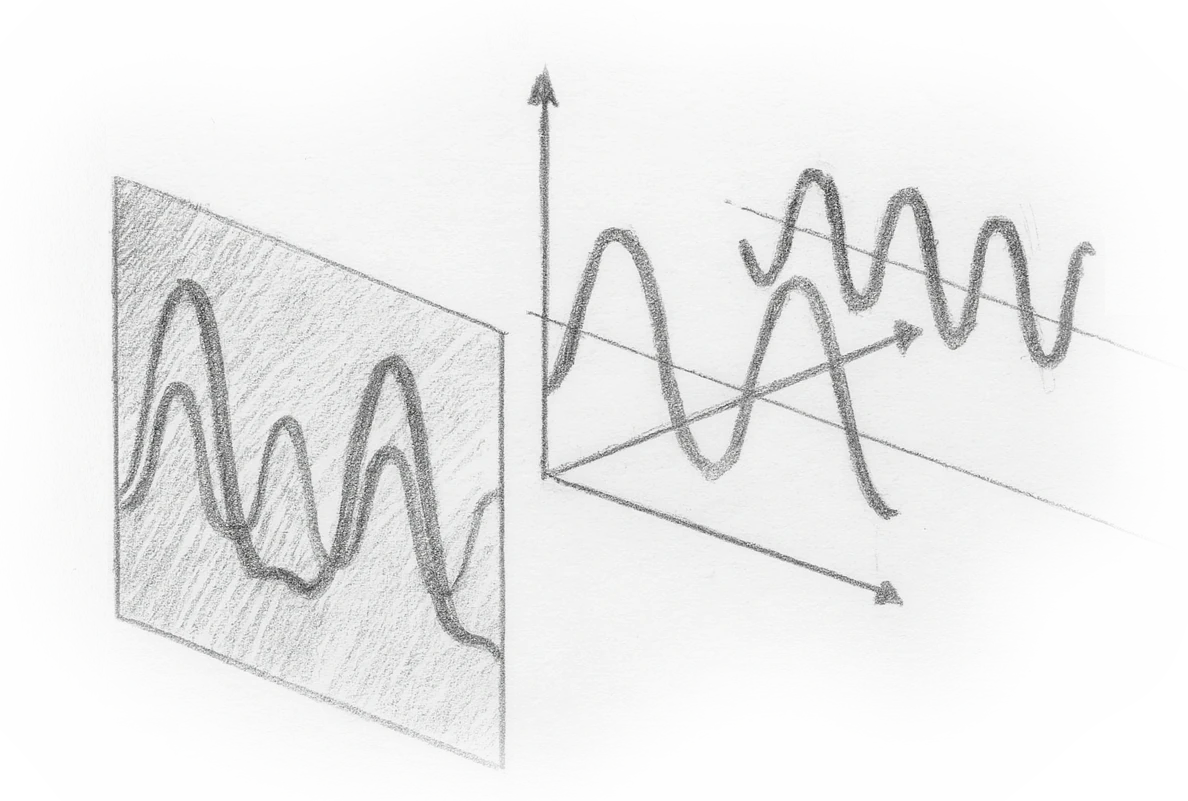
Quantum Data and Encoding
The key ingredient to tap quantum advantage
Basis encoding
Amplitude encoding
Angle encoding
Structured state preparation
QRAM
Oracle state preparation
Quantum Information Measures
The key ingredient to tap quantum advantage
Fidelity
Entropy
Information Bounds
Quantum Similarity
The key ingredient to tap quantum advantage
Similarity Estimation
Quantum Kernels
Kernel Optimization
Part III – Implementation
Understand the most important concepts underlying to quantum computing
Algorithm Engineering and Execution
The key ingredient to tap quantum advantage
Circuit Construction
Compilation and Transpilation
Experiment Management
Part IV – Quantum Algorithmic Paradigms
Query Algorithms
PyQML's unique teaching style builds on clear descriptions, easy-to-understand examples, a thrilling storyline, and a touch of (sometimes dark) humor.
Deutsch-Jozsa
Bernstein-Vazirani
Grover
Fourier-Based
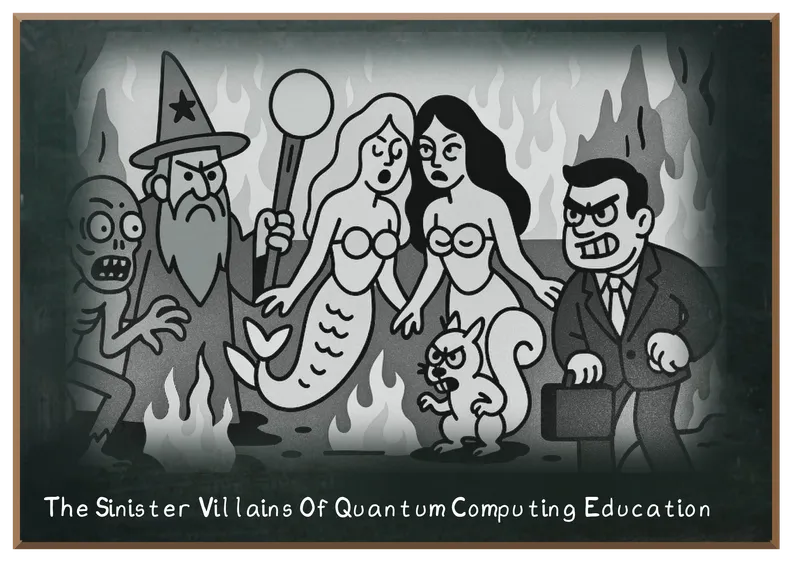
Variational and Hybrid Algorithms
PyQML is designed from the ground to protect you from these villains and their evil machinations.
•5 min read
Variational Principle
Algorithms
Optimization
Communication and Security
quantum physics. But a perspective that roots itself in the domain of practical problem solving.
•7 min read
Communication
Cryptography
Distributed
Part V – Quantum Machine Learning
Conceptual Overview
Quantum computing doesn't have to be complicated. There is no rule that says quantum computing must be taught using physical jargon, incomprehensible equations, and long, dry paragraphs.
Quantum Learning Theory
PyQML's unique teaching style builds on clear descriptions, easy-to-understand examples, a thrilling storyline, and a touch of (sometimes dark) humor.
Quantum Models and Architectures
PyQML's unique teaching style builds on clear descriptions, easy-to-understand examples, a thrilling storyline, and a touch of (sometimes dark) humor.
Training and Optimization
When you start your quantum computing journey, you will inevitably be confronted with a lot of math. It is intimidating. PyQML is different!
•7 min read
Generalization and Scaling
PyQML is here to offer a different look at quantum computing and quantum machine learning. A perspective that does not has its roots in the world of quantum physics. But a perspective that roots itself in the domain of practical problem solving.
•7 min read
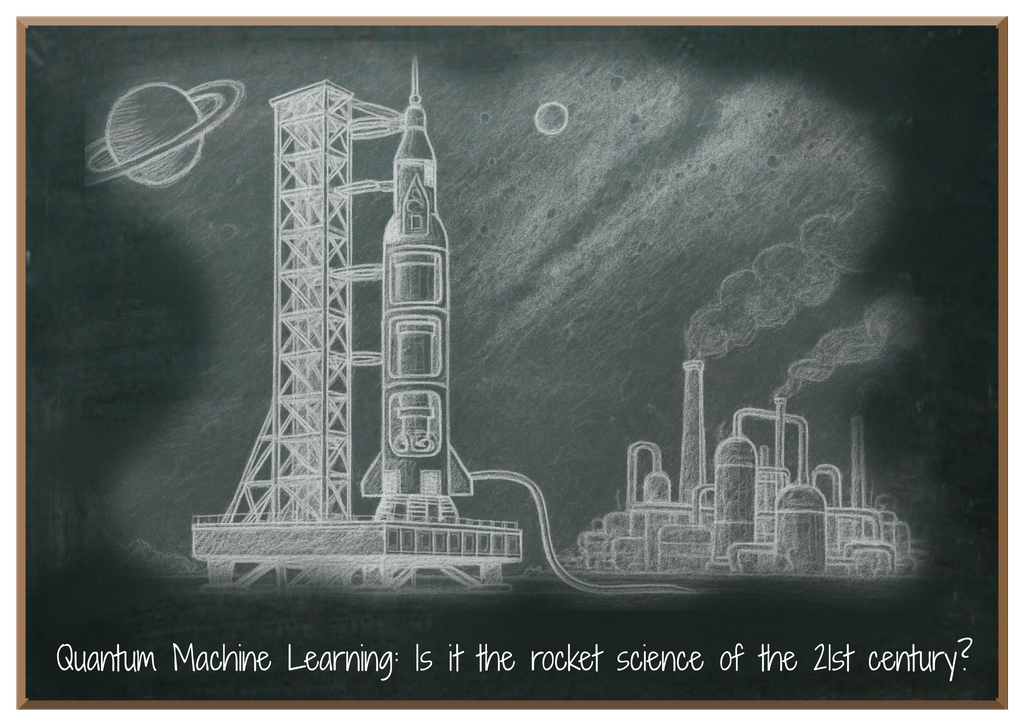
Real-World Quantum Machine Learning Applications
PyQML is designed from the ground to protect you from these villains and their evil machinations.
•5 min read
Cognitive Fallacies
Source-Apportionment
ATM Withdrawals
Portfolio Optimization
Space Exploration
Part VI – Hardware and Validation
Choose how you want to explore Quantum Machine Learning

Hardware and Physical Realization
Lorem ipsum
Qubit Technologies
Noise and Control
Benchmarking Hardware
Noise and Decoherence
Lorem ipsum
Physical vs. Logical Qubits
Sources of Noise
Noise Models
Error Mitigation
Lorem ipsum
ZNE
PEC
CDR
MEM
Fault Tolerance and Error Correction
Lorem ipsum
Classical
Stabilizer
Surface Code
Topological