How Do We Mark the Good Stuff?
The Oracle Of Grover's Algorithm
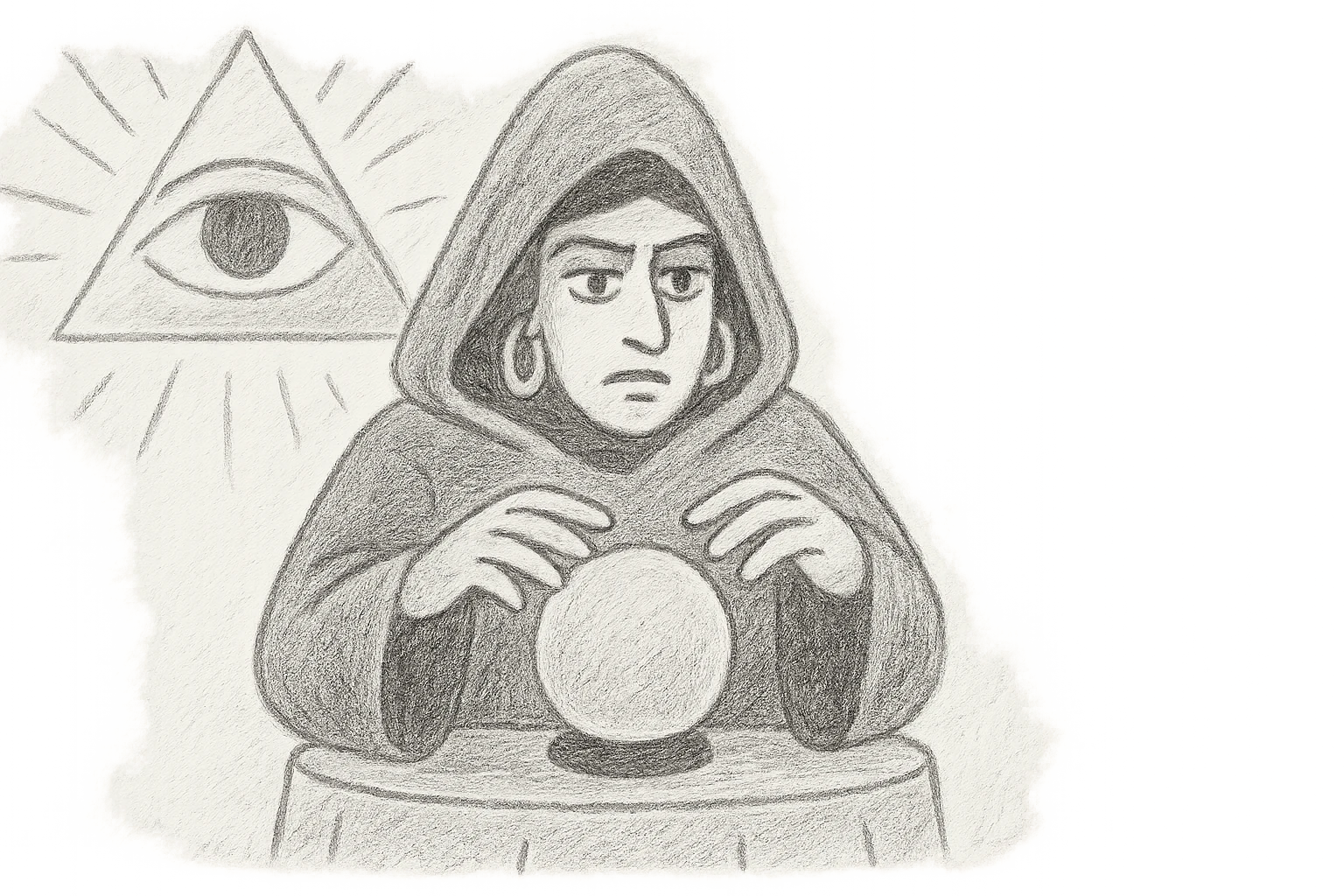
The oracle is not magic. It is a way to tag the solution
The goal of amplitude amplification is to increase the probability of favorable solutions. In our example, we use the amplitude amplification technique to increase the probability of the winning shell.

Amplitude Amplification
In the previous post we learned that this is a two-step procedure. First, the An oracle is a black-box function that encodes information about a problem—typically deciding whether a given input satisfies some condition. It’s implemented as a quantum operation that can be queried in superposition, allowing a quantum algorithm to extract global properties of the function more efficiently than classical methods. Oracles are central to algorithms like Grover’s and Deutsch–Jozsa, where they guide the computation without revealing internal details.
Learn more about Oracle reverses the sign of the In quantum computing an amplitude is a complex number that describes the weight of a basis state in a quantum superposition. The squared magnitude of an amplitude gives the probability of measuring that basis state. Amplitudes can interfere, this means adding or canceling, allowing quantum algorithms to bias outcomes toward correct solutions.
Learn more about Amplitude that corresponds to the A basis state in quantum computing is one of the fundamental states that form the building blocks of a quantum system’s state space. For a single qubit, the basis states are
Learn more about Basis State that represents the correct answer. Then the The diffusion operator (also called the Grover diffusion operator) is a unitary operation that inverts the amplitude of each state about the average amplitude. It’s used in Grover’s search algorithm to amplify the probability of the marked (target) state. Mathematically, it’s represented as
Learn more about Diffusion Operator reflects all In quantum computing an amplitude is a complex number that describes the weight of a basis state in a quantum superposition. The squared magnitude of an amplitude gives the probability of measuring that basis state. Amplitudes can interfere, this means adding or canceling, allowing quantum algorithms to bias outcomes toward correct solutions.
Learn more about Amplitude by the mean, boosting the one that is the farthest from the mean. That is the marked A quantum state is the complete mathematical description of a quantum system, containing all the information needed to predict measurement outcomes. It’s usually represented by a wavefunction or a state vector in a Hilbert space. The state defines probabilities, not certainties, for observable quantities like position, momentum, or spin.
Learn more about Quantum State. The one with a negative In quantum computing an amplitude is a complex number that describes the weight of a basis state in a quantum superposition. The squared magnitude of an amplitude gives the probability of measuring that basis state. Amplitudes can interfere, this means adding or canceling, allowing quantum algorithms to bias outcomes toward correct solutions.
Learn more about Amplitude
So, the An oracle is a black-box function that encodes information about a problem—typically deciding whether a given input satisfies some condition. It’s implemented as a quantum operation that can be queried in superposition, allowing a quantum algorithm to extract global properties of the function more efficiently than classical methods. Oracles are central to algorithms like Grover’s and Deutsch–Jozsa, where they guide the computation without revealing internal details.
Learn more about Oracle only job is to reverse the sign of the In quantum computing an amplitude is a complex number that describes the weight of a basis state in a quantum superposition. The squared magnitude of an amplitude gives the probability of measuring that basis state. Amplitudes can interfere, this means adding or canceling, allowing quantum algorithms to bias outcomes toward correct solutions.
Learn more about Amplitude corresponding to the correct answer, as ? shows.
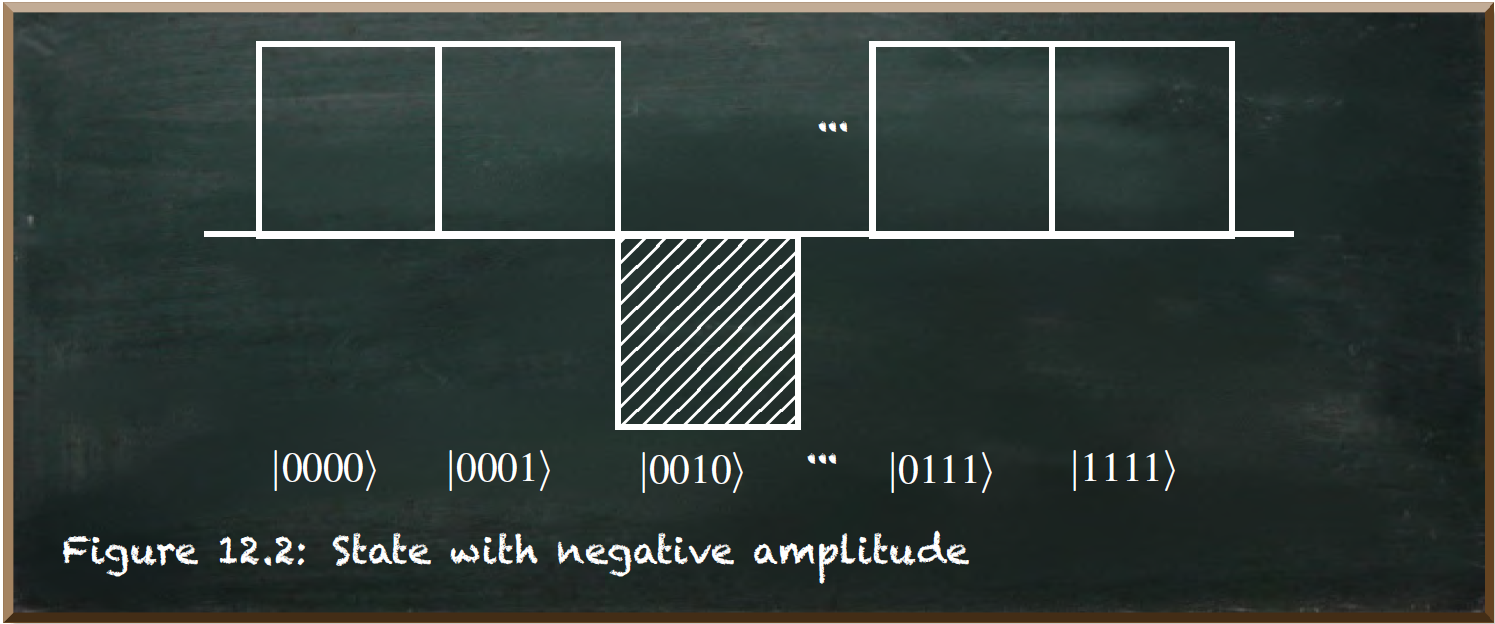
The oracle marks the correct basis state by reversing its phase, not its probability
But what does it actually mean to reverse the In quantum computing an amplitude is a complex number that describes the weight of a basis state in a quantum superposition. The squared magnitude of an amplitude gives the probability of measuring that basis state. Amplitudes can interfere, this means adding or canceling, allowing quantum algorithms to bias outcomes toward correct solutions.
Learn more about Amplitude of a A quantum state is the complete mathematical description of a quantum system, containing all the information needed to predict measurement outcomes. It’s usually represented by a wavefunction or a state vector in a Hilbert space. The state defines probabilities, not certainties, for observable quantities like position, momentum, or spin.
Learn more about Quantum State
After all, Superposition in quantum computing means a quantum bit (qubit) can exist in multiple states (0 and 1) at the same time, rather than being limited to one like a classical bit. Mathematically, it’s a linear combination of basis states with complex probability amplitudes. This allows quantum computers to process many possible inputs simultaneously, enabling exponential speedups for certain problems.
Learn more about Superposition tells us that every A quantum system is any physical system that is subject to the laws of quantum mechanics, whereby quantities such as energy or spin can only assume discrete (quantized) values. Its behavior is described by a wave function that encodes the probabilities of possible measurement results.
Learn more about Quantum System is in a A complex number is a number that has two parts: a real part and an imaginary part, written as
Learn more about Complex Number linear combination of its A basis state in quantum computing is one of the fundamental states that form the building blocks of a quantum system’s state space. For a single qubit, the basis states are
Learn more about Basis State
- A single A qubit is the basic unit of quantum information, representing a superposition of 0 and 1 states.
Learn more about Quantum Bit has two A basis state in quantum computing is one of the fundamental states that form the building blocks of a quantum system’s state space. For a single qubit, the basis states areand ; any other qubit state is a superposition of these. In systems with multiple qubits, basis states are all possible combinations of s and s (e.g., , , , and ), forming an orthonormal basis for the system’s Hilbert space.
Learn more about Basis State:is a basis state.
Learn more aboutand is a basis state.
Learn more about. - A two-A qubit is the basic unit of quantum information, representing a superposition of 0 and 1 states.
Learn more about Quantum Bit A quantum system is any physical system that is subject to the laws of quantum mechanics, whereby quantities such as energy or spin can only assume discrete (quantized) values. Its behavior is described by a wave function that encodes the probabilities of possible measurement results.
Learn more about Quantum System has four A basis state in quantum computing is one of the fundamental states that form the building blocks of a quantum system’s state space. For a single qubit, the basis states areand ; any other qubit state is a superposition of these. In systems with multiple qubits, basis states are all possible combinations of s and s (e.g., , , , and ), forming an orthonormal basis for the system’s Hilbert space.
Learn more about Basis State:, , , and . - A three-A qubit is the basic unit of quantum information, representing a superposition of 0 and 1 states.
Learn more about Quantum Bit A quantum system is any physical system that is subject to the laws of quantum mechanics, whereby quantities such as energy or spin can only assume discrete (quantized) values. Its behavior is described by a wave function that encodes the probabilities of possible measurement results.
Learn more about Quantum System has eight A basis state in quantum computing is one of the fundamental states that form the building blocks of a quantum system’s state space. For a single qubit, the basis states areand ; any other qubit state is a superposition of these. In systems with multiple qubits, basis states are all possible combinations of s and s (e.g., , , , and ), forming an orthonormal basis for the system’s Hilbert space.
Learn more about Basis State. And so on.
Each of these A basis state in quantum computing is one of the fundamental states that form the building blocks of a quantum system’s state space. For a single qubit, the basis states are
Learn more about Basis State has a A complex number is a number that has two parts: a real part and an imaginary part, written as
Learn more about Complex Number In quantum computing an amplitude is a complex number that describes the weight of a basis state in a quantum superposition. The squared magnitude of an amplitude gives the probability of measuring that basis state. Amplitudes can interfere, this means adding or canceling, allowing quantum algorithms to bias outcomes toward correct solutions.
Learn more about Amplitude that denotes its contribution to the overall A quantum system is any physical system that is subject to the laws of quantum mechanics, whereby quantities such as energy or spin can only assume discrete (quantized) values. Its behavior is described by a wave function that encodes the probabilities of possible measurement results.
Learn more about Quantum System A complex number is a number that has two parts: a real part and an imaginary part, written as
Learn more about Complex Number here means the In quantum computing an amplitude is a complex number that describes the weight of a basis state in a quantum superposition. The squared magnitude of an amplitude gives the probability of measuring that basis state. Amplitudes can interfere, this means adding or canceling, allowing quantum algorithms to bias outcomes toward correct solutions.
Learn more about Amplitude is a two-dimensional A complex number is a number that has two parts: a real part and an imaginary part, written as
Learn more about Complex Number. This is similar to a 2D A vector is a mathematical object that has both magnitude (size) and direction. It’s often represented as an arrow or as an ordered list of numbers (components) that describe its position in space, such as
Learn more about Vector with magnitude (absolute length) and A **quantum phase** is the angle component of a particle’s wavefunction that determines how its probability amplitude interferes with others. It doesn’t affect observable probabilities directly but becomes crucial when comparing two or more states, as phase differences lead to interference effects. Essentially, it encodes the relative timing or “alignment” of quantum waves.
Learn more about Quantum Phase (direction). See ?.
By inversion, we mean that we add a minus sign to the A real number is any number that can represent a distance along a continuous line, including all rational numbers (like fractions and integers) and irrational numbers (like
Learn more about Real Number part of the A complex number is a number that has two parts: a real part and an imaginary part, written as
Learn more about Complex Number In quantum computing an amplitude is a complex number that describes the weight of a basis state in a quantum superposition. The squared magnitude of an amplitude gives the probability of measuring that basis state. Amplitudes can interfere, this means adding or canceling, allowing quantum algorithms to bias outcomes toward correct solutions.
Learn more about Amplitude
Apparently, this flip of the sign has no effect on the magnitude. But it changes the direction of the A vector is a mathematical object that has both magnitude (size) and direction. It’s often represented as an arrow or as an ordered list of numbers (components) that describe its position in space, such as
Learn more about Vector It changes the A **quantum phase** is the angle component of a particle’s wavefunction that determines how its probability amplitude interferes with others. It doesn’t affect observable probabilities directly but becomes crucial when comparing two or more states, as phase differences lead to interference effects. Essentially, it encodes the relative timing or “alignment” of quantum waves.
Learn more about Quantum Phase. It marks the favorable A quantum state is the complete mathematical description of a quantum system, containing all the information needed to predict measurement outcomes. It’s usually represented by a wavefunction or a state vector in a Hilbert space. The state defines probabilities, not certainties, for observable quantities like position, momentum, or spin.
Learn more about Quantum State
The heart of the An oracle is a black-box function that encodes information about a problem—typically deciding whether a given input satisfies some condition. It’s implemented as a quantum operation that can be queried in superposition, allowing a quantum algorithm to extract global properties of the function more efficiently than classical methods. Oracles are central to algorithms like Grover’s and Deutsch–Jozsa, where they guide the computation without revealing internal details.
Learn more about Oracle implementation is the The Z-gate changes the phase of the
Learn more about Z-Gate The The Z-gate changes the phase of the
Learn more about Z-Gate rotates a the A quantum state vector is a mathematical object (usually denoted |ψ⟩) that fully describes the state of a quantum system. Its components give the probability amplitudes for finding the system in each possible basis state. The squared magnitude of each component gives the probability of measuring that corresponding outcome.
Learn more about Quantum State Vector of a A qubit is the basic unit of quantum information, representing a superposition of 0 and 1 states.
Learn more about Quantum Bit
Learn more about Bloch Sphere
Or, more precisely, it multiplies the In quantum computing an amplitude is a complex number that describes the weight of a basis state in a quantum superposition. The squared magnitude of an amplitude gives the probability of measuring that basis state. Amplitudes can interfere, this means adding or canceling, allowing quantum algorithms to bias outcomes toward correct solutions.
Learn more about Amplitude of
Learn more about
This rotation leaves the A quantum state vector is a mathematical object (usually denoted |ψ⟩) that fully describes the state of a quantum system. Its components give the probability amplitudes for finding the system in each possible basis state. The squared magnitude of each component gives the probability of measuring that corresponding outcome.
Learn more about Quantum State Vector distance from the poles (and thus its In quantum computing, measurement is the process of extracting classical information from a quantum state. It collapses a qubit’s superposition into one of its basis states (usually
Learn more about Measurement probabilities) unchanged, but reverses its A **quantum phase** is the angle component of a particle’s wavefunction that determines how its probability amplitude interferes with others. It doesn’t affect observable probabilities directly but becomes crucial when comparing two or more states, as phase differences lead to interference effects. Essentially, it encodes the relative timing or “alignment” of quantum waves.
Learn more about Quantum Phase See ?.
Marking the
If the favorable state is
Learn more about
Learn more about Z-Gate alone is sufficient. It multiplies the In quantum computing an amplitude is a complex number that describes the weight of a basis state in a quantum superposition. The squared magnitude of an amplitude gives the probability of measuring that basis state. Amplitudes can interfere, this means adding or canceling, allowing quantum algorithms to bias outcomes toward correct solutions.
Learn more about Amplitude of
Learn more about
Learn more about
? shows how we use the The Z-gate changes the phase of the
Learn more about Z-Gate to flip the In quantum computing an amplitude is a complex number that describes the weight of a basis state in a quantum superposition. The squared magnitude of an amplitude gives the probability of measuring that basis state. Amplitudes can interfere, this means adding or canceling, allowing quantum algorithms to bias outcomes toward correct solutions.
Learn more about Amplitude of a single A qubit is the basic unit of quantum information, representing a superposition of 0 and 1 states.
Learn more about Quantum Bit
- This code listing
-
QuantumCircuitfrom Qiskit, - a
QuantumCircuitwit a single A qubit is the basic unit of quantum information, representing a superposition of 0 and 1 states.
Learn more about Quantum Bit - a The Hadamard operator, often denoted H, is a single-qubit quantum gate that creates an equal superposition of
and . In other words, It turns the states of the computational basis and into the states of the Fourier basis and .
Learn more about Hadamard Operator on the qubit to put it into, - The Z-gate changes the phase of the
state by (or radians) while leaving the state unchanged. This means the amplitude of gains a negative sign, effectively flipping its phase. It's a phase-flip operation that rotates the quantum state vector a half turn around the Z-axis of the Bloch sphere.
Learn more about Z-Gate that flips the sign of theis a basis state.
Learn more aboutIn quantum computing an amplitude is a complex number that describes the weight of a basis state in a quantum superposition. The squared magnitude of an amplitude gives the probability of measuring that basis state. Amplitudes can interfere, this means adding or canceling, allowing quantum algorithms to bias outcomes toward correct solutions.
Learn more about Amplitude
? depicts the effect the The Z-gate changes the phase of the
Learn more about Z-Gate has on the In quantum computing an amplitude is a complex number that describes the weight of a basis state in a quantum superposition. The squared magnitude of an amplitude gives the probability of measuring that basis state. Amplitudes can interfere, this means adding or canceling, allowing quantum algorithms to bias outcomes toward correct solutions.
Learn more about Amplitude of a single A qubit is the basic unit of quantum information, representing a superposition of 0 and 1 states.
Learn more about Quantum Bit
Marking the
If we want to reverse the A **quantum phase** is the angle component of a particle’s wavefunction that determines how its probability amplitude interferes with others. It doesn’t affect observable probabilities directly but becomes crucial when comparing two or more states, as phase differences lead to interference effects. Essentially, it encodes the relative timing or “alignment” of quantum waves.
Learn more about Quantum Phase of
Learn more about
Learn more about Z-Gate and then unselect the state again.
For a single qubit, we can select the state
Learn more about
Learn more about Not Operation, since it swaps the In quantum computing an amplitude is a complex number that describes the weight of a basis state in a quantum superposition. The squared magnitude of an amplitude gives the probability of measuring that basis state. Amplitudes can interfere, this means adding or canceling, allowing quantum algorithms to bias outcomes toward correct solutions.
Learn more about Amplitude of
Learn more about
Learn more about
Learn more about Amplitude of the A quantum state is the complete mathematical description of a quantum system, containing all the information needed to predict measurement outcomes. It’s usually represented by a wavefunction or a state vector in a Hilbert space. The state defines probabilities, not certainties, for observable quantities like position, momentum, or spin.
Learn more about Quantum State
Learn more about
Learn more about Amplitude of
Learn more about
Learn more about Z-Gate immediately afterwards. And it becomes the In quantum computing an amplitude is a complex number that describes the weight of a basis state in a quantum superposition. The squared magnitude of an amplitude gives the probability of measuring that basis state. Amplitudes can interfere, this means adding or canceling, allowing quantum algorithms to bias outcomes toward correct solutions.
Learn more about Amplitude of
Learn more about
Learn more about Quantum State This means that when we apply the second In quantum computing, the NOT operation (also called the **X gate**) flips the state of a qubit: it turns (|0⟩) into (|1⟩) and (|1⟩) into (|0⟩). Mathematically, it’s represented by the Pauli-X matrix, which swaps the probability amplitudes of these basis states. On the Bloch sphere, it corresponds to a 180° rotation around the X-axis.
Learn more about Not Operation. Altogether, this effectively applies a The Z-gate changes the phase of the
Learn more about Z-Gate to
Learn more about

How To Select A Computational Basis State
? shows the code to mark the
Learn more about
- Here, we
- the required functions from Qiskit again,
- the
SelectGatefunction we developed in How To Select A Computational Basis State, - a
QuantumCircuitwith a single A qubit is the basic unit of quantum information, representing a superposition of 0 and 1 states.
Learn more about Quantum Bit - a The Hadamard operator, often denoted H, is a single-qubit quantum gate that creates an equal superposition of
and . In other words, It turns the states of the computational basis and into the states of the Fourier basis and .
Learn more about Hadamard Operator on the qubit to put it into, - state
is a basis state.
Learn more aboutby flipping it to is a basis state.
Learn more about - The Z-gate changes the phase of the
state by (or radians) while leaving the state unchanged. This means the amplitude of gains a negative sign, effectively flipping its phase. It's a phase-flip operation that rotates the quantum state vector a half turn around the Z-axis of the Bloch sphere.
Learn more about Z-Gate that flips the sign of the nowis a basis state.
Learn more aboutIn quantum computing an amplitude is a complex number that describes the weight of a basis state in a quantum superposition. The squared magnitude of an amplitude gives the probability of measuring that basis state. Amplitudes can interfere, this means adding or canceling, allowing quantum algorithms to bias outcomes toward correct solutions.
Learn more about Amplitude -
is a basis state.
Learn more aboutby flipping it back from is a basis state.
Learn more about
? shows how the amplitudes change during this circuit.
Essentially, we create the state
Learn more about Global Phase
Marking a Specific State in Multi-Qubit Systems
When we have several qubits, follow the same pattern. First, we select the A quantum state is the complete mathematical description of a quantum system, containing all the information needed to predict measurement outcomes. It’s usually represented by a wavefunction or a state vector in a Hilbert space. The state defines probabilities, not certainties, for observable quantities like position, momentum, or spin.
Learn more about Quantum State we want to mark. Therefore, we apply In quantum computing, the NOT operation (also called the **X gate**) flips the state of a qubit: it turns (|0⟩) into (|1⟩) and (|1⟩) into (|0⟩). Mathematically, it’s represented by the Pauli-X matrix, which swaps the probability amplitudes of these basis states. On the Bloch sphere, it corresponds to a 180° rotation around the X-axis.
Learn more about Not Operation to all the A qubit is the basic unit of quantum information, representing a superposition of 0 and 1 states.
Learn more about Quantum Bit where the target A quantum state is the complete mathematical description of a quantum system, containing all the information needed to predict measurement outcomes. It’s usually represented by a wavefunction or a state vector in a Hilbert space. The state defines probabilities, not certainties, for observable quantities like position, momentum, or spin.
Learn more about Quantum State is
Next, we just want to reverse the A **quantum phase** is the angle component of a particle’s wavefunction that determines how its probability amplitude interferes with others. It doesn’t affect observable probabilities directly but becomes crucial when comparing two or more states, as phase differences lead to interference effects. Essentially, it encodes the relative timing or “alignment” of quantum waves.
Learn more about Quantum Phase of this one A quantum state is the complete mathematical description of a quantum system, containing all the information needed to predict measurement outcomes. It’s usually represented by a wavefunction or a state vector in a Hilbert space. The state defines probabilities, not certainties, for observable quantities like position, momentum, or spin.
Learn more about Quantum State in which all A qubit is the basic unit of quantum information, representing a superposition of 0 and 1 states.
Learn more about Quantum Bit are
Learn more about
Learn more about Z-Gate to all A qubit is the basic unit of quantum information, representing a superposition of 0 and 1 states.
Learn more about Quantum Bit we would select all states in which there is an odd number of
Learn more about
To reverse only the In quantum computing an amplitude is a complex number that describes the weight of a basis state in a quantum superposition. The squared magnitude of an amplitude gives the probability of measuring that basis state. Amplitudes can interfere, this means adding or canceling, allowing quantum algorithms to bias outcomes toward correct solutions.
Learn more about Amplitude of this one state where all A qubit is the basic unit of quantum information, representing a superposition of 0 and 1 states.
Learn more about Quantum Bit are
Learn more about
Learn more about Controlled Z Gate In a two-qubit system, the A controlled-Z (CZ) gate is a two-qubit quantum gate that flips the phase of the second qubit (adds a minus sign) only if the first qubit is in the state
Learn more about Controlled Z Gate applies a A **quantum phase** is the angle component of a particle’s wavefunction that determines how its probability amplitude interferes with others. It doesn’t affect observable probabilities directly but becomes crucial when comparing two or more states, as phase differences lead to interference effects. Essentially, it encodes the relative timing or “alignment” of quantum waves.
Learn more about Quantum Phase reversal only if both qubits are in the state
Learn more about
Learn more about Quantum Bit can be considered as a control. The effect is the same. The In quantum computing an amplitude is a complex number that describes the weight of a basis state in a quantum superposition. The squared magnitude of an amplitude gives the probability of measuring that basis state. Amplitudes can interfere, this means adding or canceling, allowing quantum algorithms to bias outcomes toward correct solutions.
Learn more about Amplitude of the state
When we have even more than two A qubit is the basic unit of quantum information, representing a superposition of 0 and 1 states.
Learn more about Quantum Bit , we use a A multi-controlled gate is a quantum logic gate that performs an operation on a target qubit only when several control qubits are all in a specific state (usually
Learn more about Multi-Controlled Gate The Z-gate changes the phase of the
Learn more about Z-Gate This allows us to provide an arbitrary number of control A qubit is the basic unit of quantum information, representing a superposition of 0 and 1 states.
Learn more about Quantum Bit and only applies the phase flip on the A quantum state is the complete mathematical description of a quantum system, containing all the information needed to predict measurement outcomes. It’s usually represented by a wavefunction or a state vector in a Hilbert space. The state defines probabilities, not certainties, for observable quantities like position, momentum, or spin.
Learn more about Quantum State where all the A qubit is the basic unit of quantum information, representing a superposition of 0 and 1 states.
Learn more about Quantum Bit are in
Learn more about
At the end, we must not forget to unselect the basis state using a sequence of In quantum computing, the NOT operation (also called the **X gate**) flips the state of a qubit: it turns (|0⟩) into (|1⟩) and (|1⟩) into (|0⟩). Mathematically, it’s represented by the Pauli-X matrix, which swaps the probability amplitudes of these basis states. On the Bloch sphere, it corresponds to a 180° rotation around the X-axis.
Learn more about Not Operation again.
Implementing the oracle
With these concepts at hand, implementing the An oracle is a black-box function that encodes information about a problem—typically deciding whether a given input satisfies some condition. It’s implemented as a quantum operation that can be queried in superposition, allowing a quantum algorithm to extract global properties of the function more efficiently than classical methods. Oracles are central to algorithms like Grover’s and Deutsch–Jozsa, where they guide the computation without revealing internal details.
Learn more about Oracle is straightforward. But since creating the An oracle is a black-box function that encodes information about a problem—typically deciding whether a given input satisfies some condition. It’s implemented as a quantum operation that can be queried in superposition, allowing a quantum algorithm to extract global properties of the function more efficiently than classical methods. Oracles are central to algorithms like Grover’s and Deutsch–Jozsa, where they guide the computation without revealing internal details.
Learn more about Oracle is only one step of Amplitude amplification is a quantum algorithmic technique that increases the probability of measuring desired outcomes by repeatedly applying a specific operator that amplifies their amplitude. It generalizes Grover’s search algorithm, working for any algorithm with a known success amplitude. After
Learn more about Amplitude Amplification we want and need to work with our code later. Therefore, let's adhere to modularity and create a custom gate that creates an oracle for us.
How To Create Custom Operator With Qiskit
? provides the implementation of the An oracle is a black-box function that encodes information about a problem—typically deciding whether a given input satisfies some condition. It’s implemented as a quantum operation that can be queried in superposition, allowing a quantum algorithm to extract global properties of the function more efficiently than classical methods. Oracles are central to algorithms like Grover’s and Deutsch–Jozsa, where they guide the computation without revealing internal details.
Learn more about Oracle.
- In this code listing, we
- the required functions from Qiskit again,
- the
SelectGatefunction we developed in How To Select A Computational Basis State, - the input. We throw a
ValueErrorif the input is not a binary string, - a
QuantumRegister. This holds our A qubit is the basic unit of quantum information, representing a superposition of 0 and 1 states.
Learn more about Quantum Bit and makes it easier to work with them, - a
QuantumCircuitthat takes ourQuantumRegister, - the A basis state in quantum computing is one of the fundamental states that form the building blocks of a quantum system’s state space. For a single qubit, the basis states are
and ; any other qubit state is a superposition of these. In systems with multiple qubits, basis states are all possible combinations of s and s (e.g., , , , and ), forming an orthonormal basis for the system’s Hilbert space.
Learn more about Basis State the An oracle is a black-box function that encodes information about a problem—typically deciding whether a given input satisfies some condition. It’s implemented as a quantum operation that can be queried in superposition, allowing a quantum algorithm to extract global properties of the function more efficiently than classical methods. Oracles are central to algorithms like Grover’s and Deutsch–Jozsa, where they guide the computation without revealing internal details.
Learn more about Oracle is supposed to mark, - a A multi-controlled gate is a quantum logic gate that performs an operation on a target qubit only when several control qubits are all in a specific state (usually
). It generalizes the controlled-NOT (CNOT) gate, which has one control and one target. For example, a Toffoli gate is a 2-controlled NOT—it flips the target qubit only if both controls are 1.
Learn more about Multi-Controlled Gate The Z-gate changes the phase of thestate by (or radians) while leaving the state unchanged. This means the amplitude of gains a negative sign, effectively flipping its phase. It's a phase-flip operation that rotates the quantum state vector a half turn around the Z-axis of the Bloch sphere.
Learn more about Z-Gate. Qiskit allows us to add controls to any of the standard gates. Here, we use theZGateand append controls to it. We leave one A qubit is the basic unit of quantum information, representing a superposition of 0 and 1 states.
Learn more about Quantum Bit as the target, - the A basis state in quantum computing is one of the fundamental states that form the building blocks of a quantum system’s state space. For a single qubit, the basis states are
and ; any other qubit state is a superposition of these. In systems with multiple qubits, basis states are all possible combinations of s and s (e.g., , , , and ), forming an orthonormal basis for the system’s Hilbert space.
Learn more about Basis State again, - the
QuantumCircuitinto a reusable A quantum gate is a basic operation that changes the state of one or more qubits, similar to how a logic gate operates on bits in classical computing. It uses unitary transformations, meaning it preserves the total probability (the state’s length in complex space). Quantum gates enable superposition and entanglement, allowing quantum computers to perform computations that classical ones cannot efficiently replicate.
Learn more about Quantum Gate.
We can now use this gate in our overall A quantum circuit is a sequence of quantum gates applied to qubits, representing the operations in a quantum computation. Each gate changes the qubits’ state using quantum mechanics principles like superposition and entanglement. The final qubit states, when measured, yield the circuit’s computational result probabilistically.
Learn more about Quantum Circuit we started to implement in the previous post.
Amplitude Amplification
? ...
The only change is the of the Oracle.
? depicts the overall circuit with the An oracle is a black-box function that encodes information about a problem—typically deciding whether a given input satisfies some condition. It’s implemented as a quantum operation that can be queried in superposition, allowing a quantum algorithm to extract global properties of the function more efficiently than classical methods. Oracles are central to algorithms like Grover’s and Deutsch–Jozsa, where they guide the computation without revealing internal details.
Learn more about Oracle for
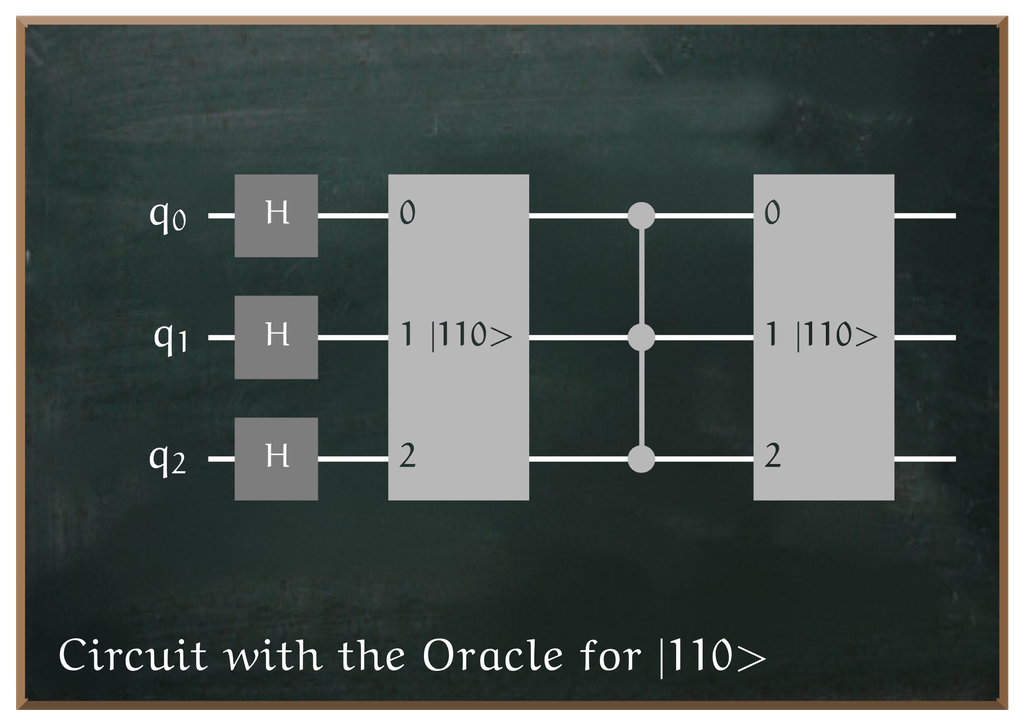
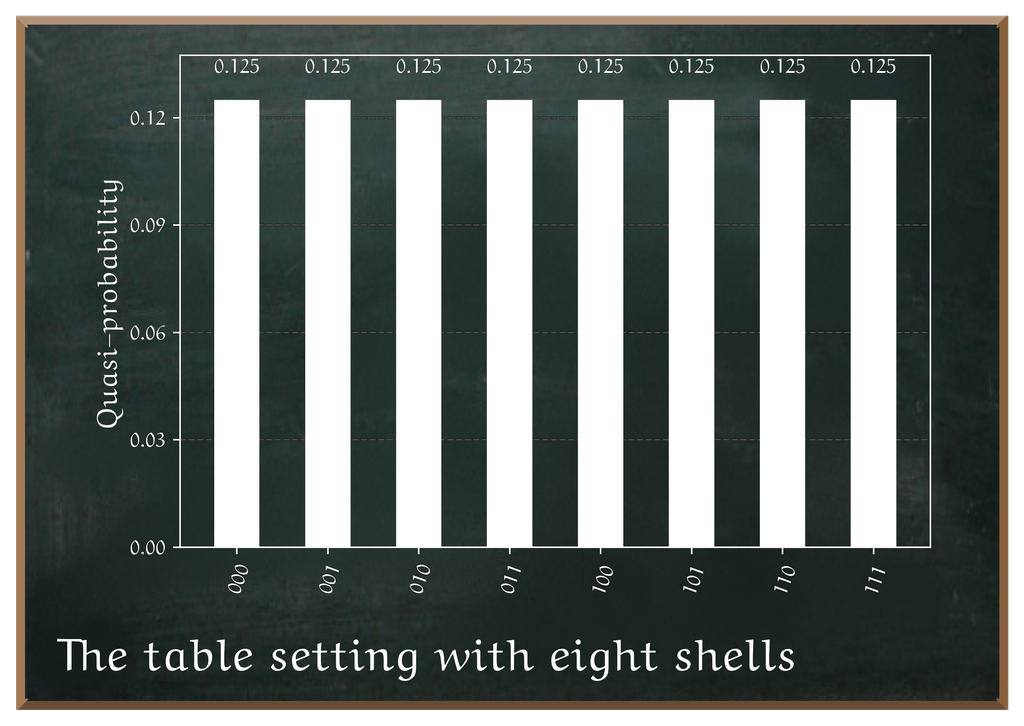
The An oracle is a black-box function that encodes information about a problem—typically deciding whether a given input satisfies some condition. It’s implemented as a quantum operation that can be queried in superposition, allowing a quantum algorithm to extract global properties of the function more efficiently than classical methods. Oracles are central to algorithms like Grover’s and Deutsch–Jozsa, where they guide the computation without revealing internal details.
Learn more about Oracle alone does not affect the In quantum computing, measurement is the process of extracting classical information from a quantum state. It collapses a qubit’s superposition into one of its basis states (usually
Learn more about Measurement outcomes. So, we still see that all states are equally likely in ?.
This is going to change in the next post, when we create the The diffusion operator (also called the Grover diffusion operator) is a unitary operation that inverts the amplitude of each state about the average amplitude. It’s used in Grover’s search algorithm to amplify the probability of the marked (target) state. Mathematically, it’s represented as
Learn more about Diffusion Operator.