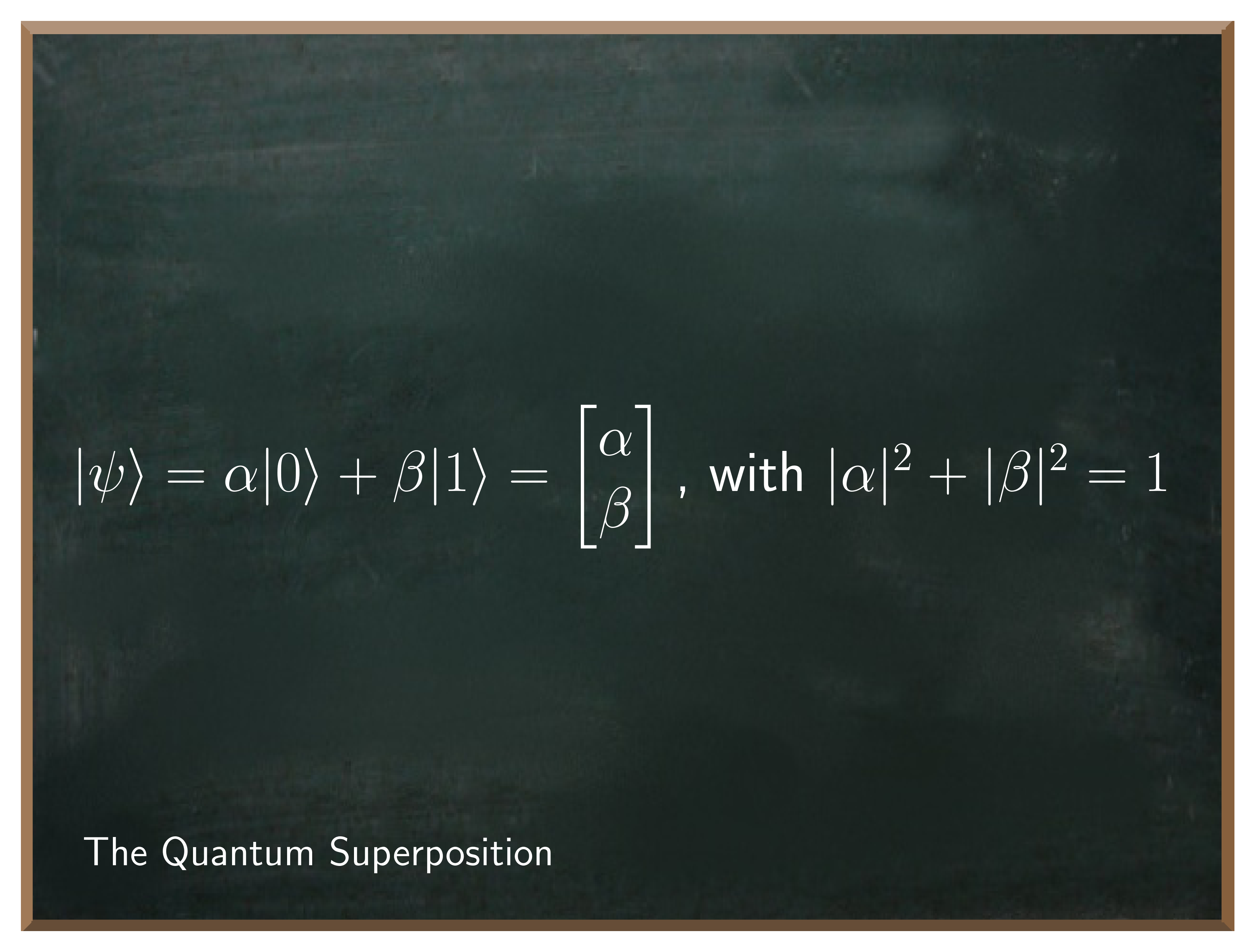
How do you make sense of the Quantum Superposition in quantum computing means a quantum bit (qubit) can exist in multiple states (0 and 1) at the same time, rather than being limited to one like a classical bit. Mathematically, it’s a linear combination of basis states with complex probability amplitudes. This allows quantum computers to process many possible inputs simultaneously, enabling exponential speedups for certain problems. Learn more about Superposition, practically?
How do you get first-hand experience of how A quantum state is the complete mathematical description of a quantum system, containing all the information needed to predict measurement outcomes. It’s usually represented by a wavefunction or a state vector in a Hilbert space. The state defines probabilities, not certainties, for observable quantities like position, momentum, or spin. Learn more about Quantum State and their In quantum computing an amplitude is a complex number that describes the weight of a basis state in a quantum superposition. The squared magnitude of an amplitude gives the probability of measuring that basis state. Amplitudes can interfere, this means adding or canceling, allowing quantum algorithms to bias outcomes toward correct solutions. Learn more about Amplitude lead to certain In quantum computing, measurement is the process of extracting classical information from a quantum state. It collapses a qubit’s superposition into one of its basis states (usually or ), with probabilities determined by the amplitudes of those states. After measurement, the qubit’s state becomes definite, destroying the original superposition. Learn more about Measurement probabilities?
Many beginners in Quantum Computing is a different kind of computation that builds upon the phenomena of Quantum Mechanics. Learn more about Quantum Computing start with the A quantum circuit is a sequence of quantum gates applied to qubits, representing the operations in a quantum computation. Each gate changes the qubits’ state using quantum mechanics principles like superposition and entanglement. The final qubit states, when measured, yield the circuit’s computational result probabilistically. Learn more about Quantum Circuit perspective. And why not? It is taught everywhere. You'll find many examples. Not least, it feels tangible. Just as if you were coding a classic program.
However, the learning curve is pretty steep. You'll have to cope with everything at once.
How to initialize a quantum circuit and its qubits?
How to add quantum gates to turn the quantum state into the desired state?
How to transpile the circuit?
How to simulate and sample results from it?
These are all important lessons to learn. But there are so many knobs and bolts to deal with that it's easy to lose track before you even see the first result.
Fortunately, there is a better path to learn about A quantum state is the complete mathematical description of a quantum system, containing all the information needed to predict measurement outcomes. It’s usually represented by a wavefunction or a state vector in a Hilbert space. The state defines probabilities, not certainties, for observable quantities like position, momentum, or spin. Learn more about Quantum State One that is especially useful if you just want to understand how the In quantum computing an amplitude is a complex number that describes the weight of a basis state in a quantum superposition. The squared magnitude of an amplitude gives the probability of measuring that basis state. Amplitudes can interfere, this means adding or canceling, allowing quantum algorithms to bias outcomes toward correct solutions. Learn more about Amplitude affect the resulting In quantum computing, measurement is the process of extracting classical information from a quantum state. It collapses a qubit’s superposition into one of its basis states (usually or ), with probabilities determined by the amplitudes of those states. After measurement, the qubit’s state becomes definite, destroying the original superposition. Learn more about Measurement probabilities. This is the Qiskit is an open-source Python framework for programming and simulating quantum computers. It lets users create quantum circuits, run them on real quantum hardware or simulators, and analyze the results. Essentially, it bridges high-level quantum algorithms with low-level hardware execution. Learn more about QiskitStatevector class. It lets you look at the A quantum state is the complete mathematical description of a quantum system, containing all the information needed to predict measurement outcomes. It’s usually represented by a wavefunction or a state vector in a Hilbert space. The state defines probabilities, not certainties, for observable quantities like position, momentum, or spin. Learn more about Quantum State directly, then add A quantum gate is a basic operation that changes the state of one or more qubits, similar to how a logic gate operates on bits in classical computing. It uses unitary transformations, meaning it preserves the total probability (the state’s length in complex space). Quantum gates enable superposition and entanglement, allowing quantum computers to perform computations that classical ones cannot efficiently replicate. Learn more about Quantum Gate only when you truly need operations.
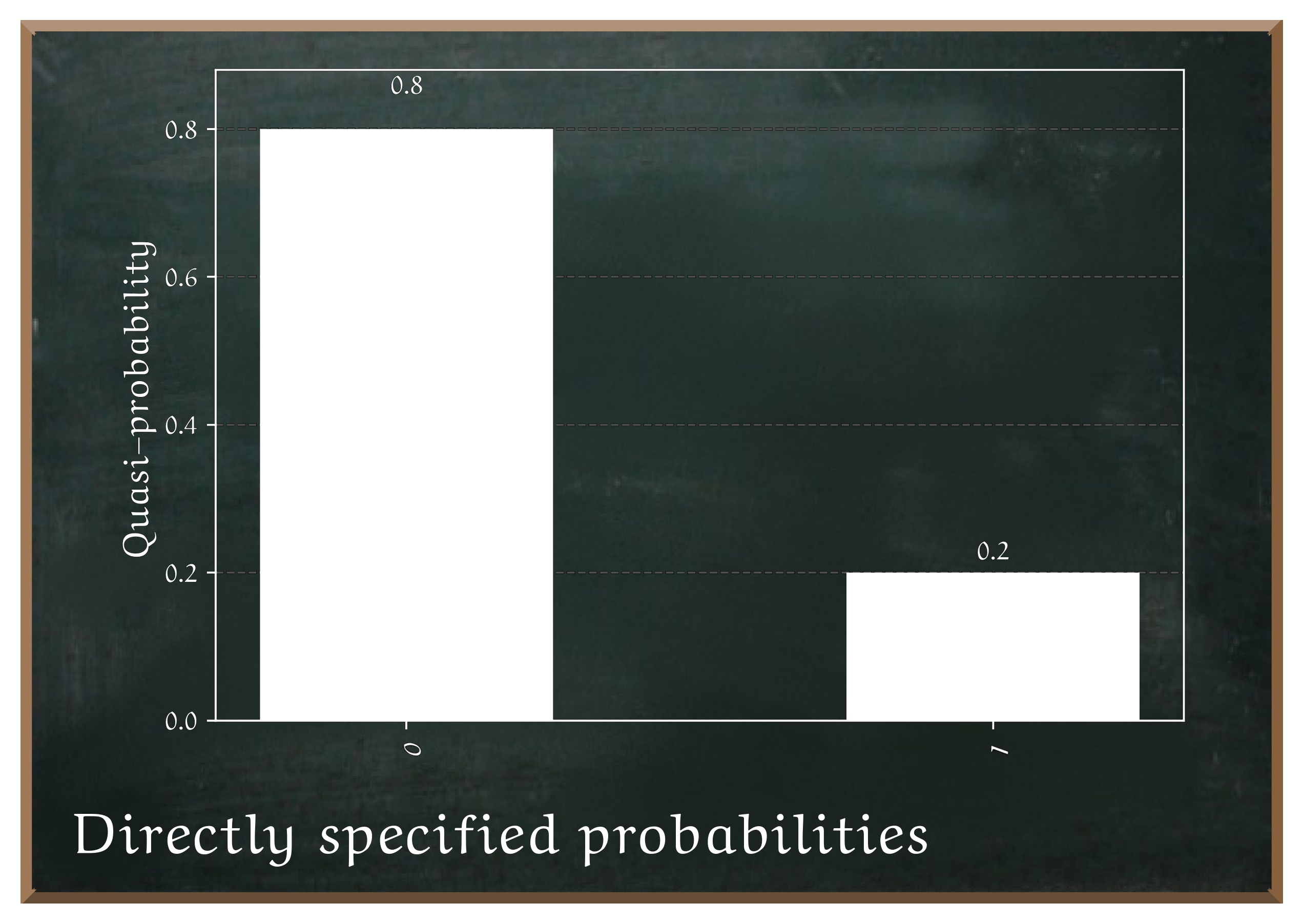
? depicts the simple example in which we specify a statevector that produces predetermined probabilities.
initial_probs.py
1
2
3
4
5
6
7
8
9
10
11
12
13
from math import sqrt
from qiskit.quantum_info import Statevector
from qiskit.visualization import plot_histogram
# P(|1⟩)
p = 0.2
# |ψ⟩ = √(1-p)|0⟩ + √p|1⟩
psi = Statevector([sqrt(1 - p), sqrt(p)])
# compute the probabilities from the statevector
# and show them in a histogram
plot_histogram(psi.probabilities_dict())
Listing 1 Initialize a quantum state vector with fixed probabilities
In this code listing, we
the required functions from math and Qiskit. Statevector is Qiskit's class for representing A quantum state is the complete mathematical description of a quantum system, containing all the information needed to predict measurement outcomes. It’s usually represented by a wavefunction or a state vector in a Hilbert space. The state defines probabilities, not certainties, for observable quantities like position, momentum, or spin. Learn more about Quantum Stateplot_histogram is a helper to plot In quantum computing, measurement is the process of extracting classical information from a quantum state. It collapses a qubit’s superposition into one of its basis states (usually or ), with probabilities determined by the amplitudes of those states. After measurement, the qubit’s state becomes definite, destroying the original superposition. Learn more about Measurement probabilities as a bar chart;
the probability , here we set it to ; accordingly the ;
the statevector with amplitudes derived from (by using the square root of the specified probabilities),
the resulting measurement probabilities in a histogram.
When we run this code, we get the output shown in ?.
Figure 1 Output of specifying the probabilities directly
The Statevector class allows us to specify the In quantum computing an amplitude is a complex number that describes the weight of a basis state in a quantum superposition. The squared magnitude of an amplitude gives the probability of measuring that basis state. Amplitudes can interfere, this means adding or canceling, allowing quantum algorithms to bias outcomes toward correct solutions. Learn more about Amplitude of a A quantum state is the complete mathematical description of a quantum system, containing all the information needed to predict measurement outcomes. It’s usually represented by a wavefunction or a state vector in a Hilbert space. The state defines probabilities, not certainties, for observable quantities like position, momentum, or spin. Learn more about Quantum State directly and analyze it with the visualization tools provided by Qiskit is an open-source Python framework for programming and simulating quantum computers. It lets users create quantum circuits, run them on real quantum hardware or simulators, and analyze the results. Essentially, it bridges high-level quantum algorithms with low-level hardware execution. Learn more about Qiskit. Just as we would look at the results of running a A quantum circuit is a sequence of quantum gates applied to qubits, representing the operations in a quantum computation. Each gate changes the qubits’ state using quantum mechanics principles like superposition and entanglement. The final qubit states, when measured, yield the circuit’s computational result probabilistically. Learn more about Quantum Circuit.
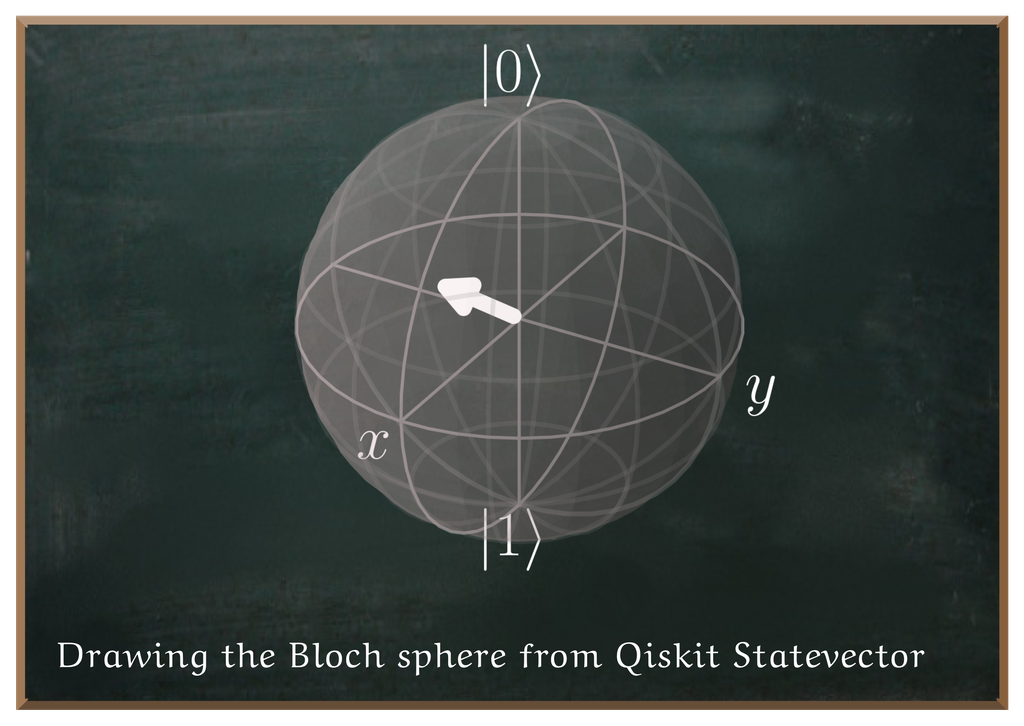
You can easily draw the The Bloch sphere is a geometric representation of a single qubit’s quantum state as a point on or inside a unit sphere. The north and south poles represent the classical states |0⟩ and |1⟩, while any other point corresponds to a superposition of them. Its position encodes the qubit’s relative phase and probability amplitudes, making it a visual tool for understanding quantum state evolution. Learn more about Bloch Sphere from the Qiskit is an open-source Python framework for programming and simulating quantum computers. It lets users create quantum circuits, run them on real quantum hardware or simulators, and analyze the results. Essentially, it bridges high-level quantum algorithms with low-level hardware execution. Learn more about QiskitStatevector as depicted in ?.
initial_probs.py.py
1
2
3
4
from qiskit.visualization import plot_bloch_multivector
# Draw Bloch sphere
plot_bloch_multivector(psi)
Listing 2 Drawing the Bloch sphere from the Qiskit Statevector
We the plot_bloch_multivector function from qiskit.visualizations and it directly with the Statevector instance we created earlier.
? shows how to access the raw data of the Statevector instance.
initial_probs.py.py
1
2
print(psi.draw())
print(psi.data)
Listing 3 Access raw data of the statevector
We can the data by calling the draw function of the Statevector instance. I returns the class and its characteristic In quantum computing an amplitude is a complex number that describes the weight of a basis state in a quantum superposition. The squared magnitude of an amplitude gives the probability of measuring that basis state. Amplitudes can interfere, this means adding or canceling, allowing quantum algorithms to bias outcomes toward correct solutions. Learn more about Amplitude. We can also the data attribute to only get the In quantum computing an amplitude is a complex number that describes the weight of a basis state in a quantum superposition. The squared magnitude of an amplitude gives the probability of measuring that basis state. Amplitudes can interfere, this means adding or canceling, allowing quantum algorithms to bias outcomes toward correct solutions. Learn more about Amplitude as a Python is a high-level, interpreted programming language known for its simple syntax and readability. It supports multiple programming paradigms, including procedural, object-oriented, and functional programming. Its extensive standard library and large ecosystem make it useful for tasks ranging from web development to data science and automation. Learn more about Python array. ? shows the output of these two ways.
Listing 4 Output of accessing the statevector data
The core idea is simple but often overlooked. Treat the A quantum state is the complete mathematical description of a quantum system, containing all the information needed to predict measurement outcomes. It’s usually represented by a wavefunction or a state vector in a Hilbert space. The state defines probabilities, not certainties, for observable quantities like position, momentum, or spin. Learn more about Quantum State as the primary object you work with as long as you can. Only use A quantum circuit is a sequence of quantum gates applied to qubits, representing the operations in a quantum computation. Each gate changes the qubits’ state using quantum mechanics principles like superposition and entanglement. The final qubit states, when measured, yield the circuit’s computational result probabilistically. Learn more about Quantum Circuit as tools when you need to act on that A quantum state is the complete mathematical description of a quantum system, containing all the information needed to predict measurement outcomes. It’s usually represented by a wavefunction or a state vector in a Hilbert space. The state defines probabilities, not certainties, for observable quantities like position, momentum, or spin. Learn more about Quantum State or map it to hardware.